


What Tests Are Needed Before Hole in Heart Treatment in Children?
September 21, 2026 | Contributed by Tanisha Patil
“Hole in the heart,” one of the first terms most used by a pediatrician, is also one of the most misunderstood. It’s actually a hole in the septum, the wall that separates the chambers in the heart; if it’s between the upper chambers, it’s an ASD (atrial septal defect); if it’s between the lower chambers, it’s a VSD (ventricular septal defect).
Both are present at birth and vary greatly in size; tiny holes can close themselves, and larger ones require surgery as a newborn. Before choosing hole in the heart treatment, doctors must run through a long list of tests.
Why Does the Diagnosis Come First?
Not all holes in the heart require surgery. Small ones close within a few years, and others never cause an issue. Treatment plans depend on the size of the hole, its location, its effects on blood flow, and the time it’s diagnosed; therefore, the process should always start with diagnostic tests, not just symptoms.
The Tests, One at a Time
The procedures themselves are straightforward, quick, and completely pain-free, with a combined result that points to a final decision.
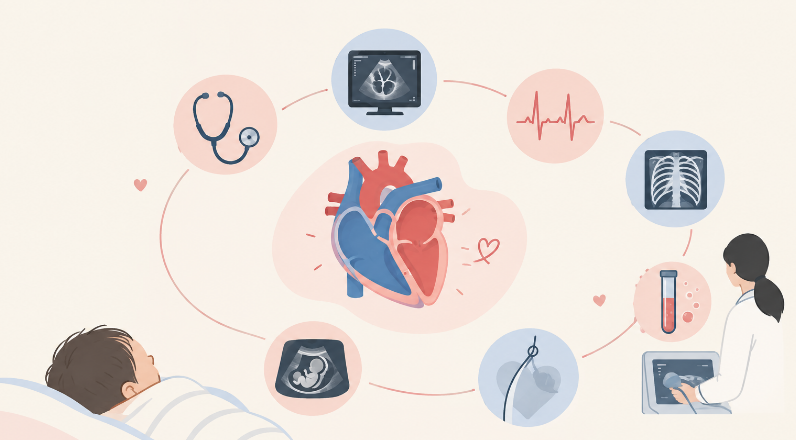
- A clinical examination and check for a heart murmur: A doctor detects a murmur while checking or screening newborns for rare cases; ASD murmur may be hard to detect until later childhood, VSD murmur more obvious.
- Echocardiogram (echo): The echo is the single most important test for diagnosing a hole in the It takes ultrasound images of the heart and makes blood flow visible. It shows the size, location, and type of hole and helps decide whether the child needs treatment or not. Electrocardiogram (ECG or EKG) An ECG shows whether the heart was under stress from abnormal blood flow caused by the hole, or if irregular heart rhythm was developing.
- Chest X-ray: An X-ray can spot if the heart was enlarged by the blood It helps judge the size of the defect.
- Bubble study: Tiny holes or ones that appear only on an echo can be visible using a contrast test, where microbubbles injected into the blood make the defect easy to find.
- Cardiac Catheterization: a more invasive heart imaging and pressure test Cardiac catheterization offers more detailed information when a hole is complex or borderline and sometimes offers a last chance to close a hole without
- Fetal echocardiogram: When a newborn ultrasound reveals a hole in the heart by birth even before the child is born, a fetal echo is an easy way to confirm the
How Does the Test Impact Treatment?
When these test results come in, a pediatric cardiologist will examine the size and location of the defect, whether it’s affecting the child’s development and health, whether it’s close to closing by itself, and finally whether to proceed with closure. Small no-symptom holes may be left alone and monitored with repeat echoes; larger holes may be scheduled for closure, early or late; infants with feeding issues or inadequate weight gain need early correction. For those with financial or geographical access constraints, NGOs like Genesis Foundation offering pediatric cardiac services at top hospitals may assist with covering the costs of these tests and help refer the child to a medical facility.
Only when this diagnostic process is completed and the results are evaluated can doctors determine a final diagnosis and plan the procedure.
At Genesis Foundation, we believe that every child with congenital heart disease deserves access to the right care at the right time. If you want to support our work through a donation to charity or a donation in NGO, click the following link: https://www.genesis-foundation.net/donate. Your contribution can help children from underserved communities access the cardiac care they need.
FAQs
Can a hole in the heart by birth close on its own?
Yes, some small holes in the heart may close naturally as a child grows. However, some defects may require regular monitoring or treatment. A pediatric cardiologist can determine the appropriate course of action based on the child’s test results and overall health. Always seek the specific advice of your physician or a qualified health provider for any questions you might have regarding a medical condition. Genesis Foundation assumes no responsibility for any reliance you place on such materials on our website.
What does Genesis Foundation do for children with congenital heart defects?
Genesis Foundation works to help children with congenital heart defects (CHDs) access timely cardiac care. Through the support of our 25+ partner hospitals, we help children from underserved communities receive the medical care they need.
How can I support Genesis Foundation’s work for children with heart defects?
You can support Genesis Foundation by making a donation to help children from lesser privileged families access cardiac diagnosis and hole in heart treatment. Your contribution can help provide children with the care they need at the right time.

