


How Successful is the Treatment of Hole in Heart in Newborns?
January 28, 2026 | Contributed by Navaneeth R.
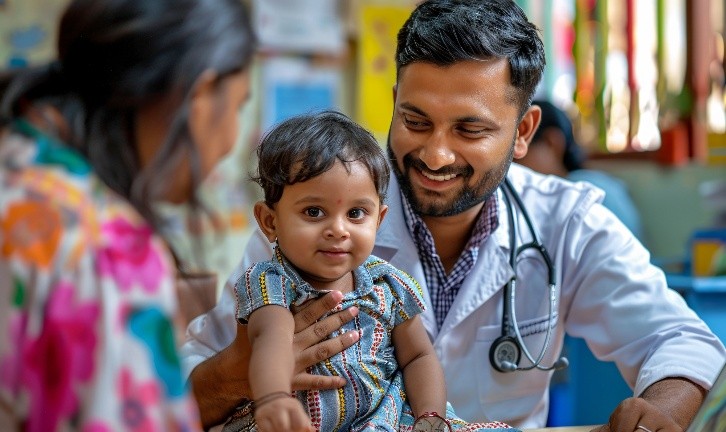
Every year, almost 2,00,000 to 2,50,000 children are born with congenital heart defect (CHD) in India. These are defects in the heart present at birth resulting in significant morbidity and mortality among newborns. A majority of congenital heart defects (CHD) are septal defects or hole in heart by birth. Based on the type and severity, the treatment options and prognosis vary for these defects but are generally considered highly treatable conditions with excellent outcomes if diagnosed early.
Understanding Hole in the Heart
Septal defects or hole in the heart by birth are structural defects in the walls separating the various chambers of the heart. Ventricular septal defects or VSD refer to a hole in the wall separating the ventricles, which are the lower two chambers of the heart and are the most common type. Similarly, Atrial septal defects (ASD) are defects in the wall separating the atria or the upper chambers. They can occur in isolation or may be associated with other complex conditions.
Treatment Options and Outcomes
Treatment of hole in heart in newborn depends on the type, size and severity. It can range from watchful waiting for smaller lesions where closure can occur spontaneously to open heart surgery. Minimally invasive options are available now, an example of which is device closure of ASD where a small device is advanced through a catheter via a vein into the heart and deployed across the defect to close it.
The outcomes of these interventions are almost always favorable. Most children with either ASD or VSD treated with both minimally invasive or open heart surgeries lead a normal life, preserving their cardiac function. In a study conducted at a tertiary care center in India, full closure was achieved for 100% of the pediatric patients and 99.2% of the adult patients who underwent device closure of ASD. Surgical closure also has excellent outcomes with 98-99% success rate. Compared to surgical closure, catheter-based techniques generally lead to shorter hospital stays and fewer complications. A study conducted in JIPMER shows a success rate of 92% for patients with complex ASD treated with device closure. Complex septal defects are difficult to treat by catheter-based closure and may require open heart surgery. Careful selection of ideal candidates for device closure is extremely important for long term success.
Possible Risks Associated with Hole in Heart Treatment?
The advancements in medical science over the past few decades have minimized the risk considerably for both open heart surgeries and catheter-based procedure. But like any other intervention, they also carry risks such as arrhythmias, residual defects even after treatment, device related erosion or perforation and infections among others. This is why regular and long term follow up is crucial for children with congenital heart defects (CHD) to monitor outcomes and detect any late complications.
It is important to note that although treatment options are available, underprivileged families are unable to afford it leading to death and disability in children with congenital heart defect (CHD) which are preventable. Cutting edge technology used in many of these techniques raises the treatment cost, essentially making it inaccessible for many families in India. Your congenital heart disease donations, however small, can create significant impact on the lives of these children.
Treatment of Hole in Heart in Newborn
Hole in heart treatment is often easier said than done. The average cost of such treatments lies in the range of Rs. 2,00,000- 4,00,000, and for many, access to these life-saving treatments remains an unattainable dream. Genesis Foundation, an NGO in Haryana, supports treatment of hole in heart in newborns. The Foundation facilitates heart treatment of children of underprivileged children (0–18 years old) born with congenital heart defects (CHD), who come from families whose monthly income is ₹20,000 or less, ensuring that economic limitations do not stand in the way of a child’s survival. Over the years, we have maintained a success rate of 98%, showing effective and reliable care.
To know more about the Foundation, call +91 96506 03438 or email contactus@genesis-foundation.net. To find out more about our work, visit www.genesis-foundation.net or follow us on- Facebook, LinkedIn, Twitter, Instagram and YouTube. To make a congenital heart disease donation, click here: https://www.genesis-foundation.net/donate.
References
- Kannady J, Amelia P, Rifa’i AD, Sianturi GHHA. Transcatheter Versus Surgical Closure of Atrial Septal Defect in Children and Adults: A Systematic Review and Meta-Analysis of Observational Studies. Anatol J Cardiol. 2026 Jan 15. doi: 10.14744/AnatolJCardiol.2025.5766
- https://www.sciencedirect.com/science/article/pii/S0019483225000574
- https://www.sciencedirect.com/science/article/pii/S0019483213003945?via%3Dihub

