

CSR for Child Health: How CSR Partnerships Help Save Children’s Lives
November 6, 2026 | Contributed by Tanisha Mondal
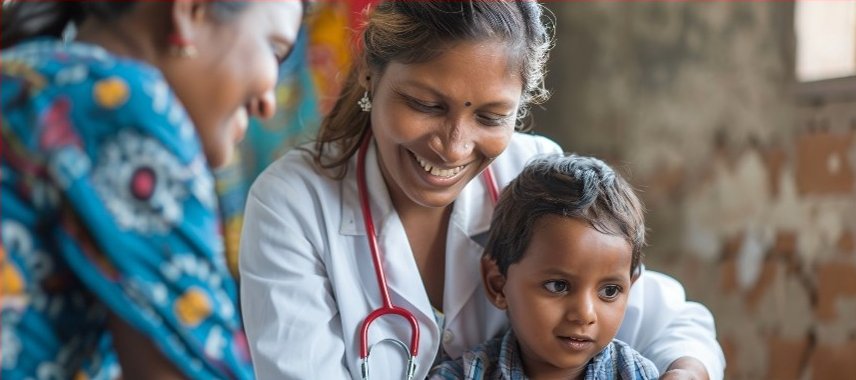
The impact of positive changes in a child’s life can be felt for decades, but often these changes don’t get noticed until much later in life, if at all. Making a child’s life better can be nourishing, safe, or hygienic. For many children, these things are not guaranteed. They are only given when help is received. Conversations about Corporate Social Responsibility (CSR) typically occur in the context of budgets, compliance, or annual reports. What gets missed are the numerous children who benefit from the life-changing decisions made by a company to invest in a specific cause.
There is a reason our CSR partnerships are much more than a corporate initiative.
Think about a rural community with inadequate healthcare and a parent’s inability to afford basic medical care. A local non-profit might know about the medical care challenges, have volunteers, and a clear understanding of the needs of the community, but may lack the most basic consistent needs of funding. Through CSR fund donation programs, the necessary funding is provided, and the medical care challenges are eliminated. Health camps and vaccination drives happen on a regular basis.
The change is clear.
One of the most important changes is a child is now able to attend school. Changes like these not only help children get the educational care and nourishment they need but allow children to focus on providing educational care to others through a healthy and nourishing ripple effect. This kind of partnership stands out because of complementary strengths and resources. Non-profits and NGOs have community knowledge, social capital, and trust. Businesses donate money, time, and other resources. Partnerships can address goals that no single entity can accomplish alone.
Corporate Social Responsibility (CSR) is improved most by sustained partnerships. One-day events are only secondary when compared to the focus that should be on sustained interaction. For example, funding and volunteering for a one-day school drive is better than nothing, but wouldn’t the programs that facilitate school for an entire year be even more impactful?
The focus on CSR support for non-profits is warranted, and soliciting support for non-profits that work with children is imperative. Solutions that address the many facets of child wellbeing (e.g. health, education) cannot be accomplished with short term focus. Support from CSR fund donors is invaluable.
Lifelong supporters provide a safety net and allow cause driven organizations to further build programs and services without the fear of funding issues. Staff can be hired and services can be offered to children who are less fortunate.
Children need advocates and they can address challenges best with the support of adults from all levels of society. Thoughtful CSR partnerships create a way for socially responsible businesses to help carry the children’s advocacy burden.
Not all partnerships reach their goals. Sometimes goals are stated poorly or there is more focus placed on measurement than impact. Strong collaborations have something in common, they see children as people with rights, aspirations, and potential, not as casework beneficiaries.
This alters everything.
Funding nutrition programs means helping children become stronger and healthier, not just helping provide nutrition. Supply sponsor funding means helping support and sponsor the education of future generations of a family, not just providing a classroom. When you consider this, corporate social responsibility (CSR) becomes a human commitment, not a corporate obligation. The quietest and most of the inspiring stories happen when a child is able to go back to school after illness, when a girl is able to support her education to become the first to ever complete her studies, and when healthcare services can provide prevention and treatment for illness in a community.
These things are usually not the result of luck.
They occur because of people working in a collaboration, are the result of a business’ choice to donate CSR funds and are the result of other funds providing the support to help this become a practice. Partnerships are the best aspect of CSR because they can help support the education and health of children for a long time, as some partnerships can literally help save a child.
Building a Healthier Future for Every Child
Every child deserves the opportunity to grow up healthy, pursue their dreams, and live a life full of possibilities. When businesses, NGOs, and communities come together with a shared purpose, CSR partnerships can turn this opportunity into reality. Beyond financial contributions, these partnerships help create lasting change by making essential healthcare accessible to children who need it the most.
At Genesis Foundation, we work towards ensuring that children from underprivileged backgrounds with congenital heart defects receive timely, life-saving cardiac treatment.
By supporting organisations like Genesis Foundation through CSR initiatives, businesses can contribute to more than healthcare funding. They can help give children a chance at a healthier future, where their dreams are not limited by the cost of medical care.
To provide CSR fund donations, drop an e-mail at contactus@genesis-foundation.net.
FAQs
Why is CSR for child health important?
CSR for Child Health helps address critical challenges such as malnutrition, limited access to healthcare, and the high cost of medical treatment. When you provide CSR support for child health, you not just fund surgeries, but also give the children a chance to fulfil their dreams and become whatever they want to be.
How can companies provide CSR support for children through Genesis Foundation?
Companies can provide CSR support for children by partnering with Genesis Foundation to help children from underprivileged backgrounds with congenital heart defects access life-saving cardiac treatment. Through CSR funding and long-term partnerships, businesses can help reduce financial barriers to treatment and give children an opportunity for a healthier future.

